The Tuscan Mining Geopark, highlighting its geological, cultural, educational, and sustainable tourism initiatives
Il Parco delle Colline Metallifere
Tuscan Mining UNESCO Geopark, north of the Tuscan Maremma, extends over an area that rises from the sea to the hills of the inner land. The territory of the Park is a treasure chest of Geodiversity and Biodiversity, a mosaic of habitats that is extremely heterogeneous: from the sand dunes and rocky shores of the Gulf of Follonica , to the coastal wetlands in the Scarlino area, to the spectacular and unique geothermal phenomena of the Biancane of Monterotondo Marirriamo, to the scrublands and hilly forests of Gavorrano and Massa Marittima, to the sub-mountains of the Cornate di Gerfalco, the Poggio di Montieri, the Sassoforte or to the magnificent Val di Farma in the territory of Roccastrada. In 2022, the Tuscan Mining UNESCO Global Geopark was joined by the geothermal areas of the territories of Castelnuovo in Val di Cecina, Pomarance (in the province of Pisa) and Radicondoli (in the province of Siena)
The park covers 118,70 hectares in the Province of Grosseto, from the sea to inland hills. It features important mineral deposits like copper, lead, silver, zinc, and geothermal fields. The area has a rich history from proto-historical times, shaped by mining and geological resources. The landscape integrates natural, archaeological, and industrial heritage sites.
The Park includes 34 mining sites, 41 geosites, more than 250 minerals and rocks surveyed that tell 300 million years of geological history about 19,000 hectares of protected areas dedicated to Biodiversity (Nature Reserves, Natura 2000 sites, biotopes, a Ramsar wetland), 139 hot spots and sites of historical, archaeological and landscape interest, hundreds of kilometres of pedestrian, bike and horse trails. In each of the municipal territories, there is one or more ‘Gateway to the Park‘, which are Reception Centres, Information Points, Documentation Centres and Museums, and where itineraries and guided tours, educational workshops, seminars, vocational training courses, eco tourism experiences and research activities in cooperation with many international universities are organised.
Technological and Archaeological Park of the Metalliferous Hills of Grosseto: Biancane Geosite
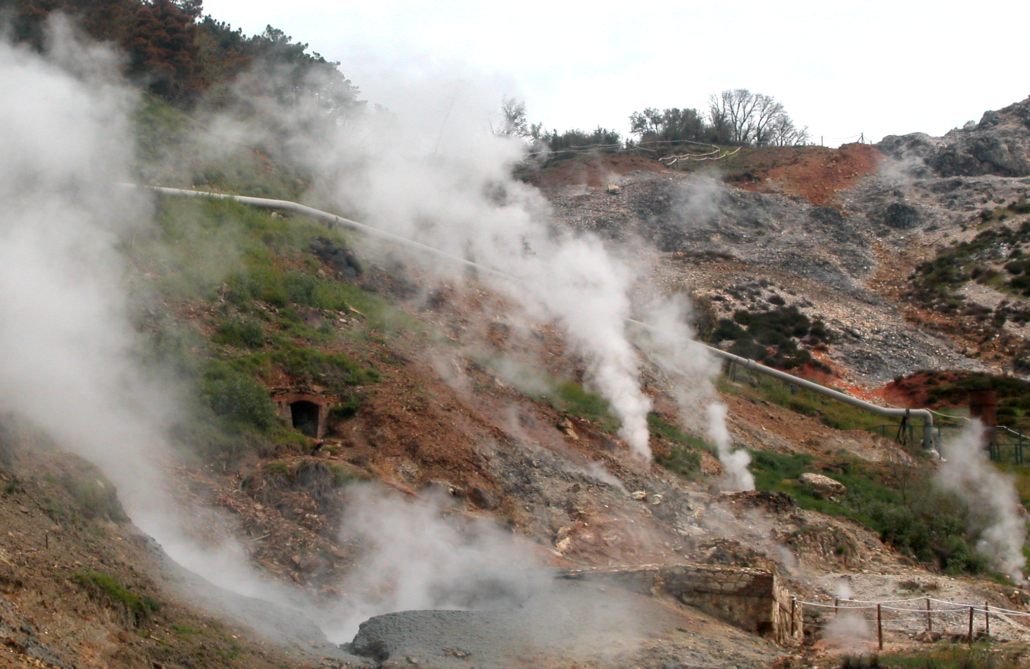
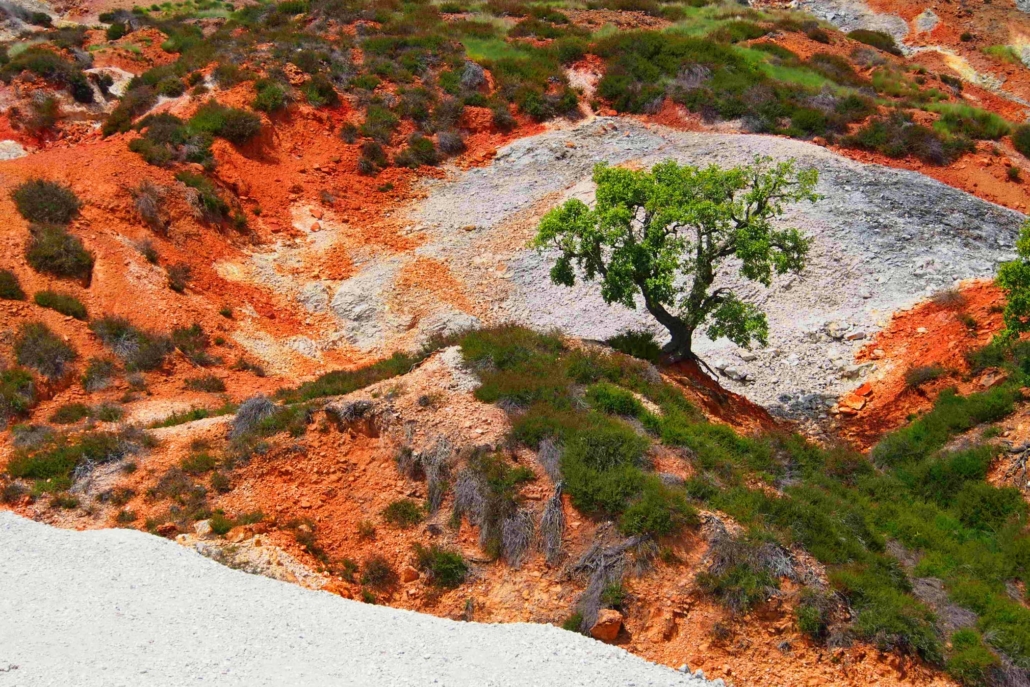
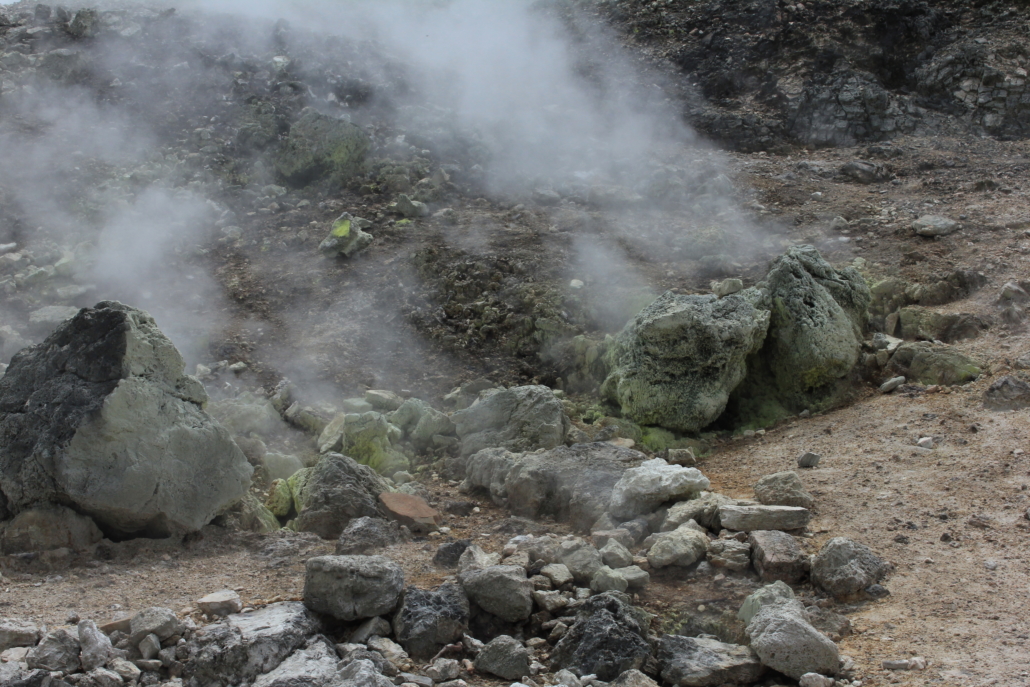
A barren and wild landscape, a striking natural environment likened to a “hellish place,” extends between Sasso Pisano and Monterotondo Marittimo, where a vast field of natural geothermal phenomena is present and active. Passing through large chestnut forests, one enters the Biancane Natural Park. The first thing that strikes the visitor is the white colour that characterizes the outcropping rocks, resulting from the leaching of geothermal fluids from the rocks themselves. Occasionally, the white is interrupted by patches of clear yellow produced by the sublimation of sulphur contained in the hottest steams.
The route allows visitors to admire unique phenomena, such as widespread exhalations of hot steam (fumaroles) emerging from numerous fissures in the ground. The area has been classified as a Site of Regional Interest (SIR) called “Geothermal Alteration Fields of Monterotondo and Sasso Pisano.”
The white steams rising from the ground, the boiling mud, and the whitish stains marking the soil give this landscape a suggestive and unusual appearance.
Biancane Nature Park
Biancane is the symbol of the relationship between Monterotondo Marittimo and geothermal energy, i.e. the energy that comes from deep within the Earth.
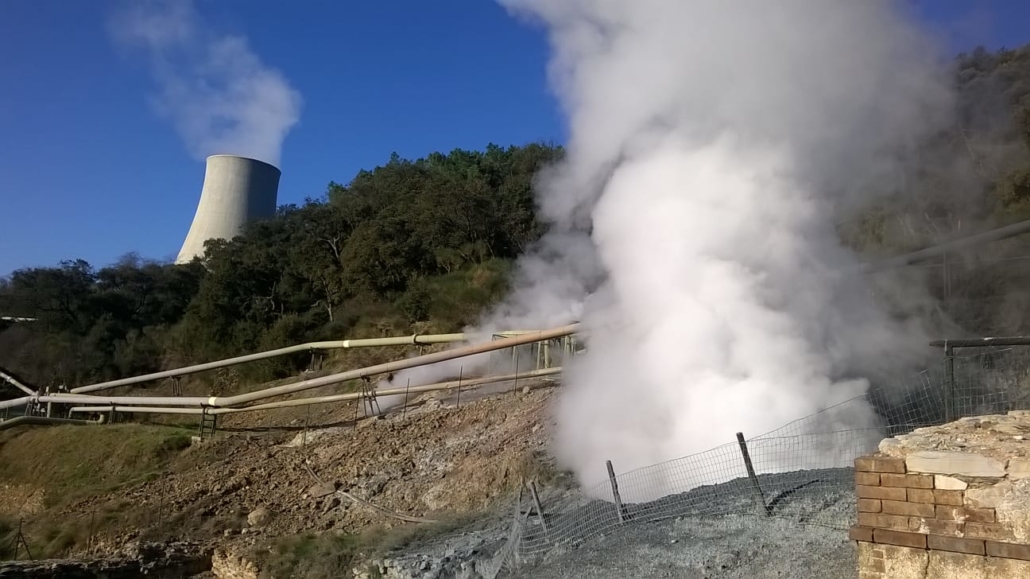
The Biancane is an extraordinary area for its vapour emissions and the way energy has modified the natural habitat and the typical colours of the Metalliferous Hills. The area also includes the historic industrial zone, where boric acid was extracted from the thermal spring waters since the early 19th century. The itinerary allows you to admire unique phenomena, such as steam escaping from the cracks in the stones, boiling water pouring out of the ground, the colour of the soil changing from a deep red to a yellow ochre, to a luminous white.
Due to these geological and climactic characteristics, an atypical flora has developed in this area, making it unique. The white vapours emitting from the ground, the boiling mud and the whitish patches marking the ground give this landscape a striking and unusual appearance.
The Gate of Monterotondo Marittimo: Mubia geomuseum of the Biancane
The MUBIA, the Geomuseum of the Biancane, is a place where it is possible to understand, through an evocative multimedia path, the geothermal phenomena that characterise the surrounding environment, a unique landscape where the heat of the earth can be “touched”. The museum also describes how man has been able to use energy and the products of such phenomena: from the discovery of boric acid to the production of electricity. In the MUBIA you can understand what geodiversity is, how minerals and rocks were formed, why the soil is so hot here and the causes of its unique colours and gaseous emissions. The MUBIA is the starting point for tours of the geological site, which is also a Special Area of Conservation (SAC) of the Natura 2000 European network with the name Campi Geotermici di Monterotondo Marittimo and Sasso Pisano.
Castelnuovo Val di Cecina – Sasso Pisano “Geysers”
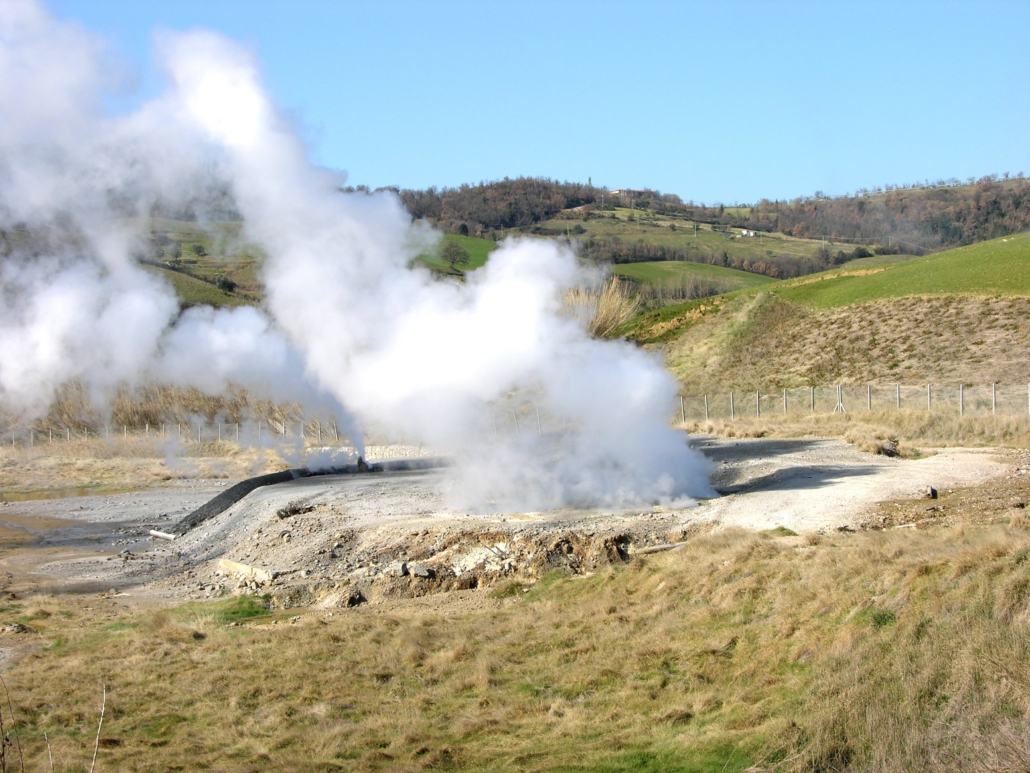
Entering the Fumarole Park means taking a walk in a surreal scenery, among small geysers. We are here below the charming medieval village of Sasso Pisano, in the locality Lagoni di Sasso, an area affected by many geothermal phenomena with a barren landscape, wild landscapes where the vegetation has given way to jets of steam, hot springs and rocks with unusual colours.
The “fumarole”. from which the park takes its name, are gaseous emissions consisting of water vapor, carbon dioxide and hydrogen sulphide that escaping from the ground cool in contact with the atmosphere condensing into fumes.
There are two routes to visit the Park of Fumarole: the former is a simple trekking route with free access along the path that connects Sasso Pisano to Monterotondo Marittimo (where the access to the Biancane Park is located), while the latter allows you to admire the geothermal manifestations in their natural state. For this reason, an expert guide or companion is recommended.
During the visit to the park you can also see the lagoni, pools of hot water fed at the base by a natural blowhole, and the solfatare, emissions of water vapor, carbon dioxide and hydrogen from the oxidation of which sulphur crystals are formed. As a result of all these phenomena, the land has atypical and even suggestive colours.