Greet Geo Project & Azores UNESCO Global Geopark:
a common vision to enhance geothermal resources & foster sustainable development
The Azores UNESCO Global Geopark (UGGp) is a unique islands geopark in the North Atlantic, at the Azores Triple Junction between the Eurasia, Nubia and North America tectonic plates. It includes a network of 122 geosites, namely the Mid Atlantic Ridge (MAR) and its deep hydrothermal fields. The MAR is the world’s most extensive rift valley, stretching north to south for approximately 16,000 km, as a seismically and volcanically active zone associated with the formation of the Atlantic Ocean. In the Azores, this underwater mountain range is located about 120 km west of Capelinhos volcano (Faial Island) ), between 840 and 3000 m deep. Associated with this ridge there are several deep-sea hydrothermal vents (e.g. black smokers), such as Lucky Strike or Menez Gwen, making this geosite one among the seven with greatest scientific value and international relevance in the Azores Geopark.
Among the terrestrial geosites of Azores UGGp, several of them have significant geothermal and hydromineral value, especially on São Miguel, Graciosa and Terceira islands, as:
Ribeira Grande Geothermal Field
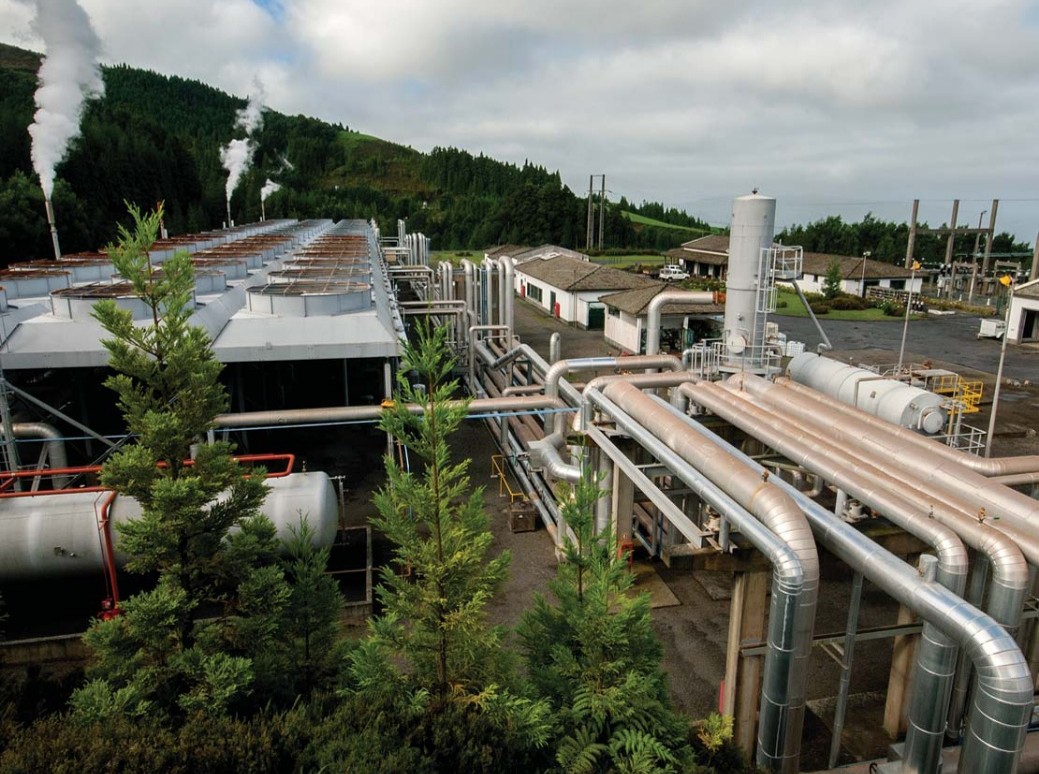
The Ribeira Grande Geothermal Field develops on the northern flank of the Fogo Volcano, São Miguel Island, including the Cachaço-Lombadas (CL) and Pico Vermelho (PV) sectors, each of them with an ORC binary geothermal power plant, that exploits a liquid-dominated deep geothermal reservoir, with temperatures about 240°C, converting its heat into electricity. With a combined power generation capacity of 23 MWnet, these power plants generated 166 GWhe of geothermal energy in 2025, that corresponded to about 33% of the needs on São Miguel Island, the largest and most populated island of the archipelago. In addition to harnessing an endogenous and renewable resource, geothermal energy contributes to strengthening the regional economy, enhance its energy independence from fossil fuels and fosters job creation. It also highlights the importance of the Azores EU Outermost Region as a relevant European player on the use of deep and high enthalpy geothermal resources to produce electricity.
Furnas Volcano Caldera
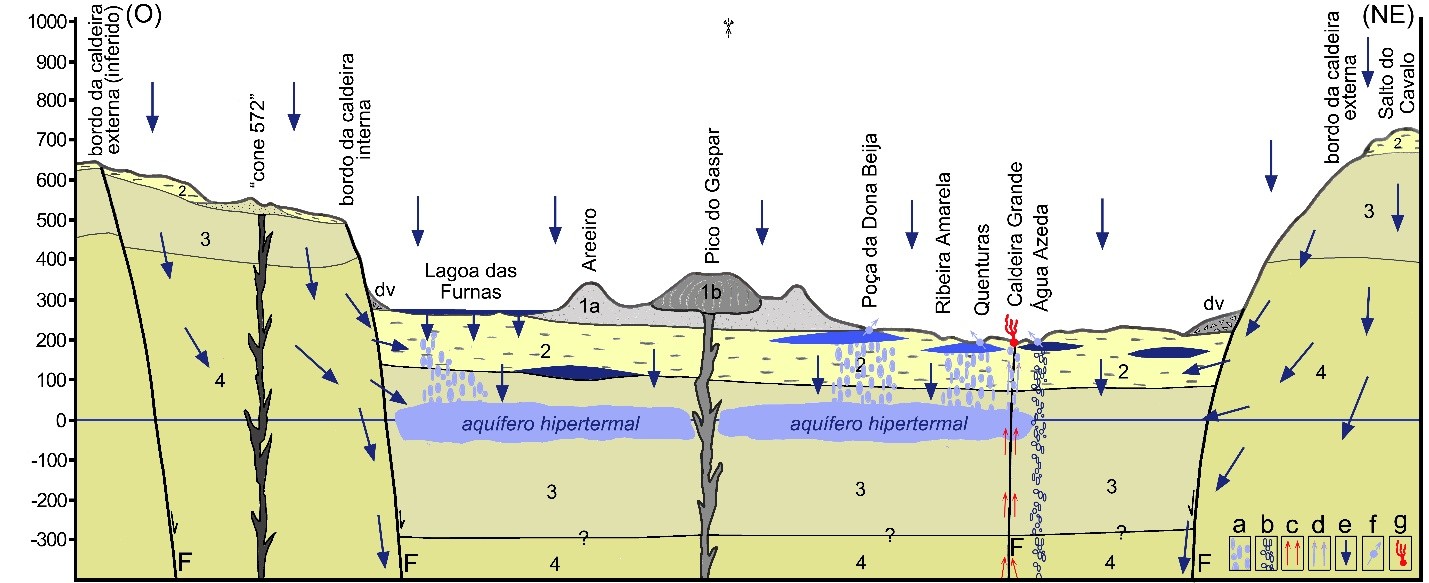
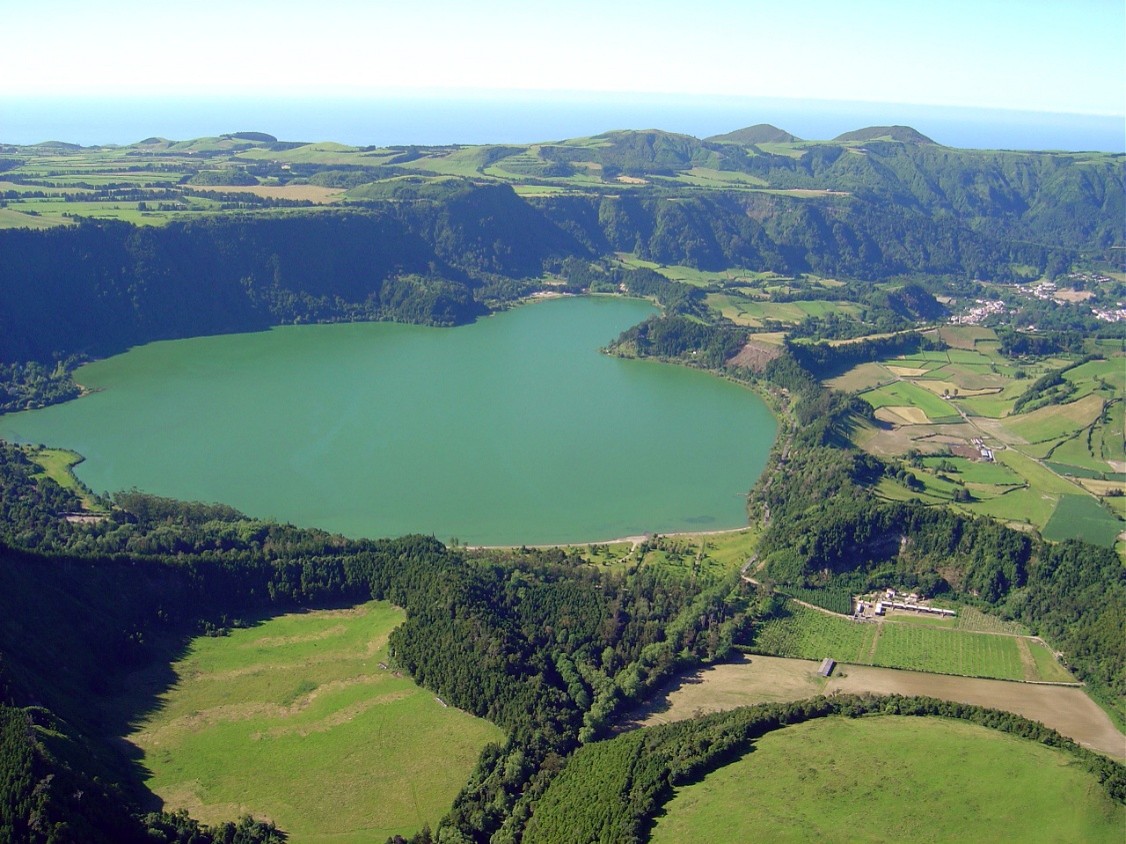
The Furnas Volcano caldera (S. Miguel Island) is the Azorean terrestrial geosite of greatest international relevance with scientific, educational, and touristic value, including impressive fumarolic fields, and a wide variety of mineral and thermal springs. Some of those superficial low enthalpy geothermal resources are long ago used by the population, visitors and tourists, as the thermal baths in pools or ponds, the cooking of the “Cozido das Furnas” (cooked in the hot soil of the volcano), and the use of volcanic mud for medical treatments and well-being purposes.
Caldeiras da Ribeira Grande and Caldeira Velha geosites
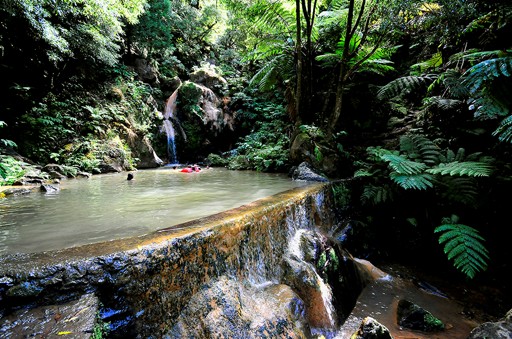
Caldeiras da Ribeira Grande and Caldeira Velha geosites, both in São Miguel Island, are important thermal areas, where its fumarolic fields and thermal waters are known and used for centuries. In the former geosite, the “Banhos da Coroa” thermal center, built in 1811, offers rheumatic and dermatological treatments with water and thermal mud from the nearby tank. Caldeira Velha geosite attracts many visitors for its exquisite natural setting, with luxuriant vegetation, iron-rich thermal water cascades, and its available infrastructures, including swimming pools and an interpretation center for geothermal, volcanological and nature conservations thematics.
Furnas do Enxofre geosite
Furnas do Enxofre geosite is the most important fumarolic field on Terceira Island, with several steaming ground type hotspots, with maximum temperatures of about 98°C. Composed essentially of steam (about 97%), this thermal area results from the upward movement and release of steam and volcanic gases through a complex underground system of fissures, fractures and pores. The gaseous phase consists mainly of carbon dioxide (about 98%) and much smaller concentrations of gases such as H2S, CH4, H2 and N2. The hydrothermal activity, wet climate conditions and vegetation of the area favors the formation of “thermal” andosoils and secondary mineral deposits, notably of clays (white) and sulfur (yellowish).
Carapacho and Restinga areas geosite
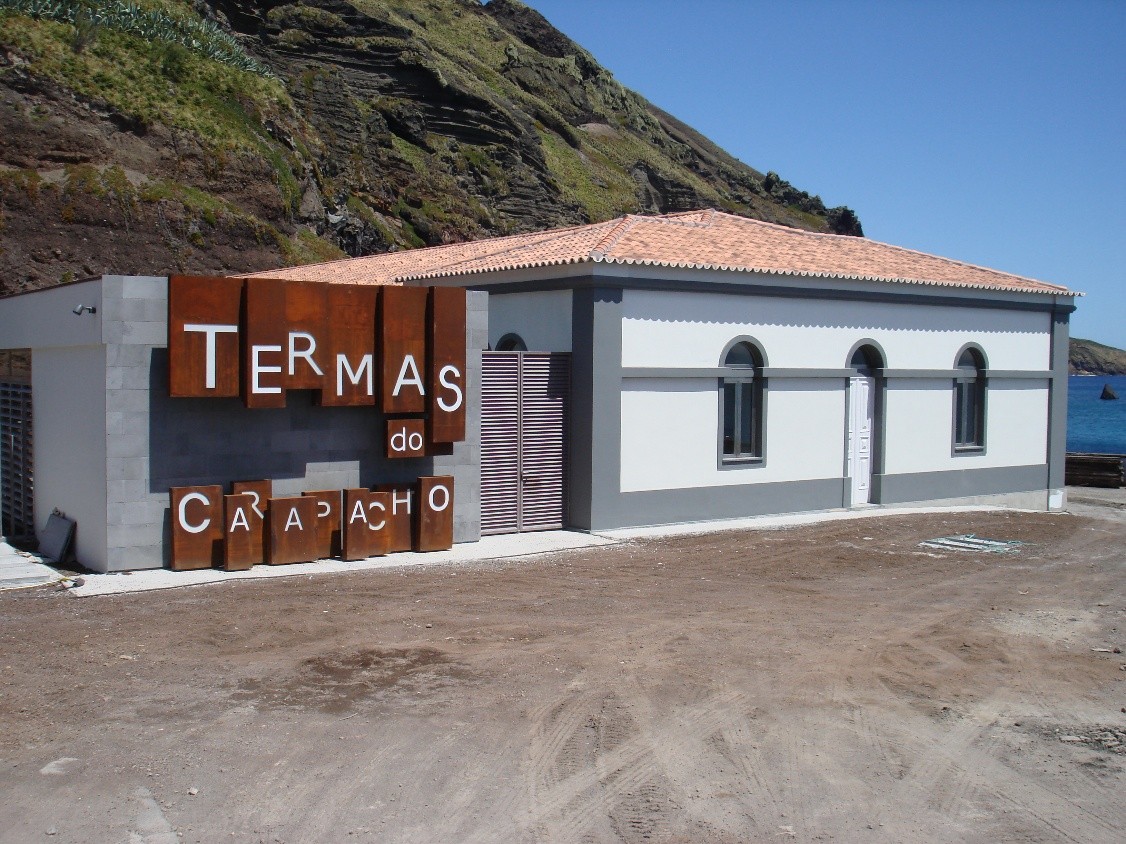
The Carapacho and Restinga areas geosite is a coastal area at the southeastern tip of Graciosa Island, where coastal erosion has exposed the bowels of the monogenetic volcanoes present in the area (e.g. Surtseyan tuff cones), including the basaltic necks and dykes of their feeding systems. In Carapacho there is a thermal spring, with sodium chloride composition, temperature of about 40°C, and well known for its therapeutic qualities, that supplies the Carapacho Thermal Baths since the 19th century.